


Wooden pallets are a natural product. But nature isn’t always on our side – moulds, fungus’s, bacteria and insects such as beetles and termites are all natural too.
So to prevent pests and diseases spreading from one country to another as the pallets travel around the world, they must be sterilised before they are used.
As companies seek to recycle wooden pallets, the problem has become even more pressing. There’s a need to ensure the products being shipped will not be contaminated by the pallet.
The most effective way of doing this is through the use of heat treated pallets.
Severe Consequences of Untreated Pallets
In the past, there have been extremely serious consequences as a result of contamination from untreated pallets.
Termites love wood, and in the early days of global pallet use, termites in pallets were brought into the southern US and proceeded to attack wooden buildings, causing severe damage and financial loss.
In other cases, pests have arrived on pallets and devastated crops and agriculture.
“Phytosanitary” Treatment of Wooden Pallets
Heat treated wooden pallets have been through a process that is “Phytosanitary”, meaning relating to the health of plants.
The International Plant Protection Convention (IPPC) is responsible for taking action to stop pests spreading from one country to another.
To meet their requirements, wooden pallets are heated for 30 minutes at 140 degrees. No bugs can survive this – nor can their eggs or larvae.
The treatment has a beneficial side effect for the pallet owners in that it greatly reduces the moisture content of the wood, and that makes the pallet much lighter, so that shipping and transport costs are lower.
Documentation and Standards
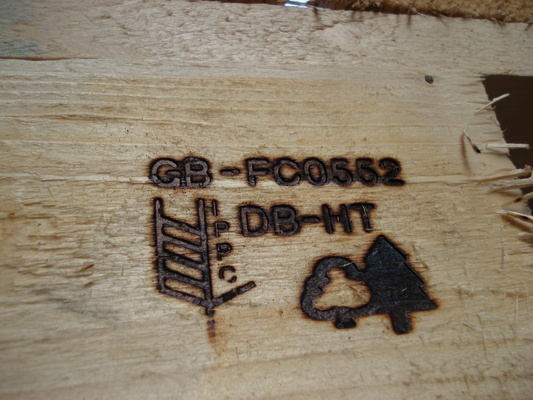
Obviously, the pallets have to be stamped to show that they have been through this process. There is an international standard known as ISPM-15 for recycling pallets hygienically.
Unless your pallets meet this standard, they may be refused entry to most countries, so it’s important to source the pallets from a reputable company.
Pallets that have been through the ISPM-15 process will be stamped with an authentication mark that is recognised worldwide.
This consists of the IPPC logo, which is an ear of corn with the “IPPC” mark next to it. Then there’s the two-letter International Standards Organisation country code.
So for pallets from the US, this would be US; for pallets from Great Britain, it would be GB.
It’s very important that the wood packaging can be traced back and a chain of responsibility established for its whole passage into the supply chain.
So the next part of the code identifies the regulator in charge of the process and the certification number used by the manufacturer of the pallet or the organisation that treated it.
Then there are two more letters that tell you how this pallet has been treated. If it’s had a compliant heat treatment, it will bear the letters HT. If it has been fumigated using the chemical methyl bromide, it will stamped with the letters MB.
These are the absolute essentials for the stamp to show that it is compliant. However, some pallet manufacturers choose to add extra details on their heat treated pallets. But if you see the ISPM 15 authentication mark, you know that the pallets are safe to use.
Read more about wooden pallet heat treatment in our ultimate guide to ISPM 15 and heat treated wooden pallets.
 Send us a message!